Heels On: Week 12 post Acoustic Neuroma Surgery

Heels On: Week 12 post Acoustic Neuroma Surgery

This is a series of blogs starting from the day I was diagnosed with an acoustic neuroma. If you want to start at the beginning then please follow this link: 

https://stellavig.blog/me-and-my-acoustic-neuroma/

Weeks 6 to 12

Determination has now taken over from Frustration. I need to set myself daily tasks that MUST be completed by the end of the day.

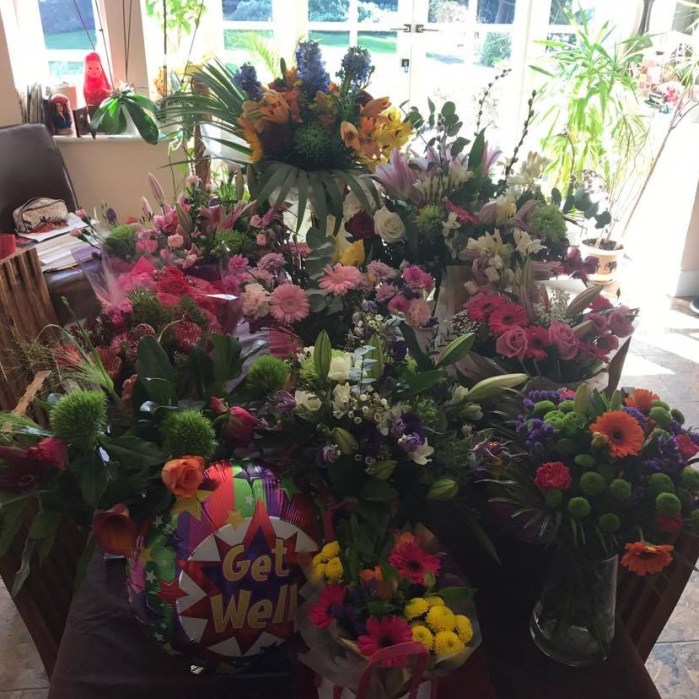
Scented flowers, some of which I have never seen before, seem to be a feature of my recovery and continue to arrive! I know in the future the hint of flowery perfume will transport me back to this time. When my mother passed, I inherited all her beautiful silk saris, some handpicked by my father as wedding gifts. They have their own place upstairs and whenever I open that wardrobe, I can picture my mother wearing each sari to a cherished special occasion. I can also imagine Mummy standing beside me as the waft of perfume that my mother used to wear hugs me.  Somehow that wardrobe continues to provide comfort. The saris are classically beautiful and vintage, some embroidered with gold and silk threads, they will be worn again and again and then handed down but only I know their true worth.

I have dried all my flowers and have started making items for a charitable sale in the future. It is a healing activity. I have to concentrate and plan each frame. It is detailed work and makes my headache return each day but I feel a real sense of achievement every time I finish one. My sister posts a finished frame onto her social media site and I get a sale!! How exciting. Now I am spurred on! My collection is growing and I will arrange a celebratory gathering in the future with an aim to raise money by selling all my wares.

V__F06A

Life is normally so busy and it is rare to get a chance to slow down. This illness has forced me do so. My two children bought me a beautiful painting set at Christmas pointing out that I used to love to paint and suggesting that this forced time off work would be a good time to restart. I have had the wooden chest containing the oils and watercolours out for several weeks but have not had any energy to get going. I now start slowly and rediscover the joy in painting. Why is it that we get so consumed with work and children that everything else is put aside. Or maybe it is just me.

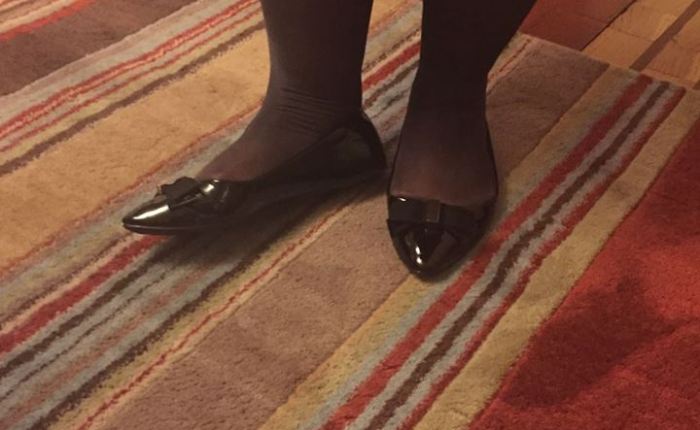
I have my first check up at the John Radcliffe. I get up early, get dressed and actually put some make up on. I look okay and decide that I need some wedge heels to complete the look. This will be the first time since my operation but I am determined to manage my heels today. I wear flats in the car but change to heels walking to my outpatient appointment. There is a notion that suggests that what patients wear changes the patient’s perception of illness as well as the clinicians’ thoughts on discharge. Pyjama paralysis is the term used to describe the inertia that creeps in when you are in pyjamas even when you are in your own home. And this gets much worse in hospital. One of my previous Consultants used to say that if a patient (female) had lipstick on then they needed to go home. As trainees, spurred on by this, we would encourage our patients to put lipstick on to persuade this Consultant to send a patient home when the patient was desperate to do so!

My sister reminds me to write down any questions I may wish to ask as I will get distracted when I get to see my Surgeon. I know the two most important ones. I really, really want to start back at work and would love to drive again.

Thinking of my current inability to drive takes me back to the time when I really disappointed my Daddy. At the age of 88, he was still driving but was becoming unsafe (in my opinion). I felt that he really should stop driving but knew that this would take away his independence. We did discuss this as a family, all of whom agreed, but I was the one who had the conversation with him. He was so irritated by me and it was only when we promised that we would take him for an independent driving test, that he agreed to consider this any further. The driving test was as expected and the team felt that Daddy could drive but only in the daytime and only to and from a limited number of destinations (all very close). They messaged this so well that Daddy felt empowered to make a decision that if he was not a 100% safe that it was probably better not to drive. I learnt many lessons about communication that day!

My sister drove me to the John Radcliffe and the trees en route have never looked so good. The cherry blossoms are in bloom and seem to have peppered all the hedgerows as we travel to Oxford. I have many pictures planned in my mind when I next find an opportunity to paint. Talking to my sister, I realise that I am struggling with the right-sided deafness which is worse than I ever expected. In quiet conditions or in a one to one conversation, I am fine. In the car, with music on, I struggle with hearing my sister clearly and I am sure that this in itself makes me feel tired. My facial movements are completely normal but I have a very dry right eye but because I keep rubbing it, I have developed great bags underneath this eye that no amount of eye cream will improve. My balance is manageable and I know that this will get better. The tiredness and inability to hold multiple thoughts is frustrating but now expected and I will just have to manage. I have started texting myself everytime I remember something I need to do otherwise I forget.

I have joined many Acoustic Neuroma groups and feel guilty reading posts from others. I have been so lucky post operatively whilst many fellow patients have not. Surgeons are skilled clinicians but my father was always the one to point out that ‘no matter what a surgeon does, Mother Nature is responsible for healing’. I managed to escape in the healing process without any major complications so certainly all the good wishes and prayers sent to me, worked.

I follow the progress of ordinary people like me who have undergone surgery previously or in parallel to me. Some have made the same progress as I and I laugh when I see that our milestones and frustrations have paralleled. Others have had a much slower and debilitating progress. I cannot tell you how lucky I feel but I have to put myself in the shoes of others whose whole lives have been turned upside down. Some have had significant facial disfigurement and are wondering out loud on social media how much recovery they will have. Others are still nauseated and very unbalanced. Others are six months out of work and are still struggling even with a phased return to work.

Every Surgeon that I know goes to work aiming to improve the lives of their patients rather than cause life changing events through surgery but complications happen in all of our hands even when surgery is really straightforward. This is why we ensure our patients are consented fully and are aware of  what might happen. I do this every day I practice but the absolute gamble as to whether YOU are the one who will encounter these problems cannot be foretold and I had completely underestimated the anxiety that this causes.

I attend my outpatients with my Surgeon. I think he is pleasantly surprised when I walk in. I still look a wreck despite my make up as my hair has become white. On men this looks distinguished, on a woman, well I just look old. He is pleased with the scar although this is still healing. I explain that I wish to dye my hair and although he agrees, his Nurse Specialist suggests that I wait another two weeks until the scar is fully healed. He knows that I am keen to go back to work and suggests a phased return at three months. He warns me that I will continue to be tired and I explain that I really believe him now.

The Surgeon and I had discussed the compromise of leaving some neuroma behind in order to maximise the preservation of the facial nerve. I have already had my follow-up MRI last week and we go through the scan results together. There is a 5mm residual part of the neuroma wrapped around the facial nerve which is very easy to see. It will need monitoring and if it grows, it may need cyberknife therapy in the future. My Surgeon explains that I will need another scan in October. That is a long time away and I forget about it. He is happy that I can start driving when I feel ready and when looking over my right shoulder stops hurting my neck. I feel like I am almost back on track.

I am so elated that I go shopping into Epsom the following day with my neighbour. I wear flats and enjoy looking around. But this is too much, too quickly. My body tells me to slow down and I fall asleep exhausted in the early evening.

I seem to be making steady progress and I reevaluate my previous commitments. I had enrolled in the Kings Fund Senior Clinical Leaders course and originally decided that I would not attend module 2 as I would not be up to it. I had not made any promises to myself after desperately wanting to attend the Association of Surgeons in Training conference at week 6 and really just being so naive at thinking I would be able to make it! I feel that I could attend the Kings Fund if I get a taxi and sleep there and back. I get my hair dyed as soon as I can so that there is some semblance of normality and I feel back in control. The course is excellent but I cannot physically attend on day 3 as I am so exhausted and end up in bed all weekend.

I still cannot engage with emails as I struggle to concentrate for long enough and I have not dared open my work emails. Twitter has been great way of communication, and a saving grace, as it makes you feel that you are part of the real world. You can Tweet from your bed and it takes very little concentration as you can dive in and out very easily from any conversation.

I am beginning to feel normal though and the weekend of Week 12 has been a great goal to look forward to. My sister and I have booked birthday presents for each other and this has ended in a personal shopping expedition, a styling session, a photo shoot and an overnight stay in the Tower Guoman in Central London. We travel into town and book in. We have a fantastic room overlooking Tower Bridge and there are crowds of people in town. We travel into Oxford Street and start the session with the personal shoppers. One takes her time and understands her client and guides her to exactly the right styles for her body shape. The other, does not get to know her client well and pulls clothes that are completely inappropriate and makes the client feel quite deflated. This reminds me of our current trainees, if you take time to get to know them and what they need, they tend to do well and flourish in a firm. If there is no educational engagement then the trainee gets along but does not feel invested in and just about survives in the current environment.

We go out for a Chinese in the evening and I look around at people walking past. We have no idea how people are managing in their lives, whether they are sad or happy, well or not, financially secure or just coping. We all wear our own facades and get on with our busy lives. Perhaps we should all take a moment or two to really look around and smile or do a good deed but not let anyone know.

The following afternoon we enjoy our photo shoot. I look at the photos which show the aftermath of illness which cannot be hidden by make up. I think back again to my companions on the acoustic neuroma journey.  Everyone has their own story and determination to back to as near normal as possible. The sharing of stories has always been a way of helping each other. Knowing what has been achieved by others gives us the hope that we can achieve this too. I look forward to the improvements and updates shared on social media and thank everyone for their honesty.


Realisation

Realisation

This is a series of blogs starting from the day I was diagnosed with an acoustic neuroma. If you want to start at the beginning then please follow this link: 

https://stellavig.blog/me-and-my-acoustic-neuroma/

Weeks 2 to 6

The last four weeks have been amazingly hard as well as fantastic. I have been at two ends of that spectrum on a daily basis. It is incredible what an operation does to you. The exhaustion that follows surgery makes you feel vulnerable as your independence fails and you need help for so many things. On the other hand, it sets the hurdles that become sequential challenges on the way to recovery.

The second week really reset my own barometer as to what I should expect to do for the first few weeks.  Simple tasks such as brushing my teeth, having a shower and having breakfast remained major challenges. Sleep became a necessity and I slept most of the day just waking up to be fed. Cleaning the house, cooking and ironing were not a priority.

I have a wonderful neighbour who visits everyday and has made me (yes made me) go for a walk as long as the weather is good. I am glad that I have not bumped into anyone else for the first few weeks as I have been out wearing pyjamas and a coat.  Just walking to the end of the drive seems such an achievement and walking to the end of the road feels like finishing a marathon. Even though it is cold, I am wearing my flat open toe shoes which is my excuse not to go for a walk when it rains. I think it was in week three that I tried wearing my heels in the bedroom as a test run. I haven’t tried since.

The children have been home which has been a welcome distraction. I cannot believe that they have finished their second term at University. My parents used to say that time seems to pass by quicker the older you get. I think I finally understand what they meant. This year is a milestone as both boys went to University at the same time and the ’empty nest feeling’ became an entity.

I think back to the start. When we found out in October that I had an acoustic neuroma, we made a decision to let the family know when we had made a decision as to when and what we were going to do. Telling the children seemed to be a special hurdle and I really did not want to tell them. It seemed wrong to tell them during their first term at University when they should be having the time of their lives so we decided we would tell them when they came home for Christmas. Even then, I tried to get out of it. There just seemed to be so many things going on which were perfect excuses. We spent the first weekend of their Christmas break at my in laws at a Christmas party. The next week was busy as I was on call and then it was a friend’s birthday party the following Saturday. We had a family dinner on the Sunday and the boys went upstairs to play computer games when we decided we really did have to tell them as otherwise it might ruin Christmas. My husband called them down saying that there was something that we both needed to discuss with them.

Eventually they both came down and my husband explained what was going on, my diagnosis, the need for an operation and potential complications. Neither boy seemed phased by this, were very supportive and said they would take time off from their studies during this time. The oldest one seemed perturbed and then declared ‘You know we thought you were going to tell us something else’.  Then he explained what he meant. He had noticed that I had not drunk alcohol at both parties and that I was and looked tired. In addition, as my balance became much worse when it was dark, my husband had helped me back to the car the night before, he had noticed that Daddy had become VERY lovey dovey! There was clearly only one reason for all of this – I must be pregnant, after all the boys had left us on our own for ten weeks!!!!! And apparently, this would have been a more disastrous scenario than the diagnosis of an acoustic neuroma. I am not sure why we had been so reticent in telling them as they took the information in their stride and have just been wonderful.

I managed to avoid visitors during the last few weeks as trying to socialise continues to be tiring. Very good friends and immediate family have come to visit and looked after themselves, making me tea and bringing even more flowers and chocolates. My hearing started becoming an issue. I seem to have lost the ability to isolate the direction of sound as well as hear when there is lots of background noise. The noise generated by a handful of visitors caused a headache and was irritating as I could not follow a conversation in the room. I needed to pace myself as I certainly developed more symptoms when I was tired; my balance changes and the side of my head becomes increasingly more painful. The more I slept, the better my symptoms seemed to be.

After four weeks my friend decided I needed to go out as I was going stir crazy! She pushed me hard and finally got me to say yes. We decided to aim for afternoon tea at a local tea shop. She had chosen one that would be quiet and also would require the least amount of walking. I pulled on trousers and a top, washed my hair and dried it but still could not summon the energy for make up sadly. I looked in the mirror and still looked exhausted. I went grey around 30 and normally have to dye my hair every 6 weeks. Men with grey hair seem chic whilst women look a little old unless they can wear the look well. As I am not allowed to dye my hair for 8 weeks, I was developing a real badger streak but there was nothing I could do about it in the short-term. I had also noticed that the side of my scalp on the operated side was slightly numb and was more sensitive to changes in temperature. A good scarf seemed to manage this problem so I ventured out wrapped up warm and cosy.

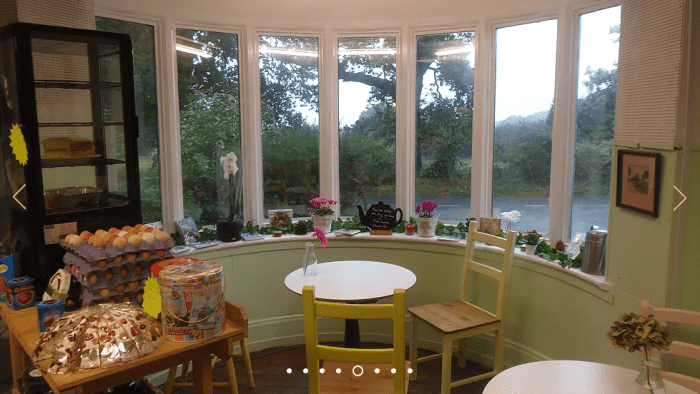
I was driven down to Headley and we went to a really lovely small tea room and village shop. It was perfect, no one else was around and we had the table by the window just as the sun came out. We ordered scones with jam and tea although I could have quite happily order the whole menu. The scones were freshly baked and warm. The butter was just soft enough to spread and there was heaps of home-made jam. The tea was served in a mish mash of old china crockery which matched by the fact it was all vintage. What was not to love? We spent several hours chatting and I felt amazing! If I could do this once, I could do this again.

tea room.png

http://gahoashoo.wixsite.com/headleytearoom

I spent the next few days recovering as my energy reserve seem to be at an all time low. It was almost as if my energy was rationed, if I used too much energy on one day, I would have to pay back on another.

I developed small ways of keeping myself busy over these few weeks. I have (with help) put all the flowers I have received into silica gel so that they will dry. This has been trial and error but we seem to be getting better at it. As the flowers dry, they have been stored in plastic boxes in my kitchen and it now looks as if I have a workshop rather than a kitchen. I make plans to do something creative with them and have ordered some frames and paper butterflies. If I can make some items, I will sell them for charity at a later date. I also decide I can make rose soaps and candles so order some moulds and wicks. I also decide that I will make the flower pictures for my two boys and keep them as fiftieth birthday presents for them. I therefore order two large frames and borders. Now that all plans are being actioned, I wait for the Amazon deliveries to start arriving!

We really are so lucky to have the two boys. They both came home for Easter to spend time with me but also kept themselves busy. The youngest one has been lambing and has really enjoyed seeing the birth of new life and taking responsibility for decision-making that ensures a good outcome for the sheep and their new lambs. There was sadness too with one lamb being born with a neurological condition that was debilitating and required a humane end to its life. My son was impressed with the passion of the farmer to ensure that his flock got the best care and start to life.

This joy of life was in contrast to the experience of the oldest who went to Poland with friends to visit the remains of Auschwitz in Poland during the same time period. He recounted the emotions and feelings when visiting the vast area. He described the unimaginable scale and the efficiency of a sheer killing machine which was only understood when you visited in person. He was clearly moved and could not understand how such evil could have been inflicted on so many.

Having been through surgery and feeling as if I have been given another chance at life, I feel even more emotional at the evil that still exists in society. The lessons of the past need to be remembered to ensure we do not drift into further atrocities. We need to stand united and enjoy each other’s differences and do what we can do to influence in our small circle, hoping that the positivity flows out and gains momentum.

Wishing for peace in the World.


13/03/17: I’m 50 & Day 14 post acoustic neuroma surgery

13/03/17: I’m 50 & Day 14 post acoustic neuroma surgery

This is a series of blogs starting from the day I was diagnosed with an acoustic neuroma. If you want to start at the beginning then please follow this link: 

https://stellavig.blog/me-and-my-acoustic-neuroma/

Today is my 50th Birthday!!!

I have been home one week and time seems to have stood still again. I have managed very little. Although I was warned that I would be tired once home, the reality is very different. It is impossible to do anything without feeling so fatigued. The need for sleep is immense but not always possible and I find myself awake for hours at night, with endless random thoughts and dreams. Partly because of this, I have not managed to get downstairs after a shower before 2pm. My head hurts and my neck aches but all the time I am grateful that I did not have any visible facial complications or major balance problems.

I have not been outside of the house yet and my plans of daily walks have gone out of the window. Daytime television and the internet are fantasies, as I cannot concentrate on anything for a long time without a serious headache. I am reminded how hard our brains normally work without humans paying any attention to these inner workings. I count myself lucky that I have such fantastic colleagues and friends that I have been able to delegate all my activities with confidence and have left my trainees in great hands. Despite this, odd thoughts keep flitting into my brain  of things I have not completed but these are very random and it is difficult to hold onto these thoughts to make any decisions! I am really struggling to see how I am going to return back to normal.

I have had the follow-up phone call from the John Radcliffe and am progressing as expected by all apart from myself! I will know next week whether this was a benign tumour but in my heart of hearts, I already know that all will be fine.

I think about today. I had started planning my 50th birthday a year ago. My sister and I had considered many ideas as to what we could do and had started to buy various little accessories for the party. I had never considered that I might not be well enough to throw a party. My diary is normally overfull and I could do with expanding my day from 24 to 30 hours. I really enjoy being busy and being organised (at work that is) and have many commitments in the diary a year in advance of now. This illness has made me realise the value of time and the need to enjoy the now. I know that I would not have stopped to consider my career and life plan without a serious illness to stop me and I am just so lucky that this is one illness that will let me get back to as near normal as possible.

When I woke up today, there were many cards, and the flowers have continued to arrive. I had so many beautiful bouquets since I arrived home and the doorbell has not stopped all morning with further deliveries. Each one is thoughtfully chosen with a heartfelt message attached and a trigger to make me cry. Patients, colleagues, friends, neighbours, trainees and complete strangers have left messages on the blog, Facebook and Whatsapp. How can I not feel better?

I struggle to get out of bed and have breakfast. I have been trying for two hours but I know what I want. I have developed a longing for toast with lots of butter. We must all go back to happy, safe times when we are in need. My mother and father were market traders when I was little. On Saturdays we would travel to Holyhead in Anglesey, North Wales. We used to arrive very early and would unload the van and set up the stall with my parents, brother and sister. In the far corner of the market, there was a huge bakery stall. They sold freshly baked bread, which first thing in the morning would still be piping hot. The smell of fresh bread drew so many customers and was good for trade for all in the market. They also sold homemade Welsh butter and jam. The three of us would enjoy doorstops of fresh bread with melting butter aplenty for breakfast and so the smell of bread always takes me back to this time. Holyhead market which was held in a Grade II listed Market Hall which was designed in 1855 by J Edwards Thomas. My brother, sister and I visited North Wales last summer and were saddened to see the ongoing demise of this beautiful building, I am so pleased to have learnt that Holyhead council have won a £2.4 miilion Heritage Lottery Fund grant and will restore it to its glory. Daddy would have been very pleased.

http://www.anglesey.gov.uk/empty-nav/news/press-releases-2017/january-2017/holyhead-market-hall-restoration-set-to-begin/130839.article

See I told you I hold random thoughts! I really do need to get up nd I need to have a shower. The plastic chair in the shower is a godsend as my legs feel so weak and I cannot stand for a long time. I feel like my 90-year-old father who needed a seat in the shower in the latter years! It still takes me around an hour to shower and get dressed. I cannot dry my hair with a hairdryer and natural drying leaves me with very frizzy hair. I have not been able to summon the energy to put on any make up and contact lenses are a luxury. There will be no photos of me on my birthday then!

The immediate family will be gathering in the evening and I am further grateful for mother nature’s best gift to me, of health and well-being. Everyday I am thankful that I have not had to manage a shortened life expectancy nor a  physical life changing event. Those that do are so courageous and I can only empathise but cannot even start to fathom the emotions and decision-making undertaken by those individuals.

As I try to choose what to wear, I am reminded of previous birthdays. One of the delights of working in the NHS is that you develop an extended family. Traditionally we have had a family celebration and a work celebration. Somehow over the past few years the trainees have started baking me cakes and decorating them. The trainees are so talented! Every year the themes have become more amazing and the cakes are so professional.

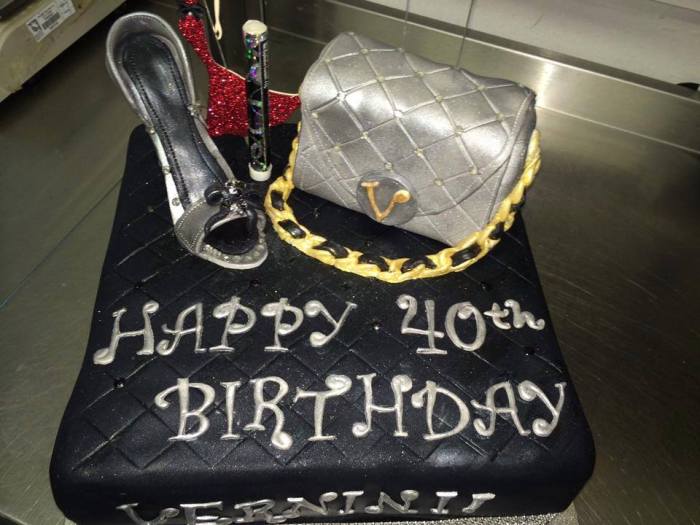
One of the trainees has turned professional and baked my sister’s 40th birthday cake. She loved it!

1017748_10200906422063415_6562655890853675966_n

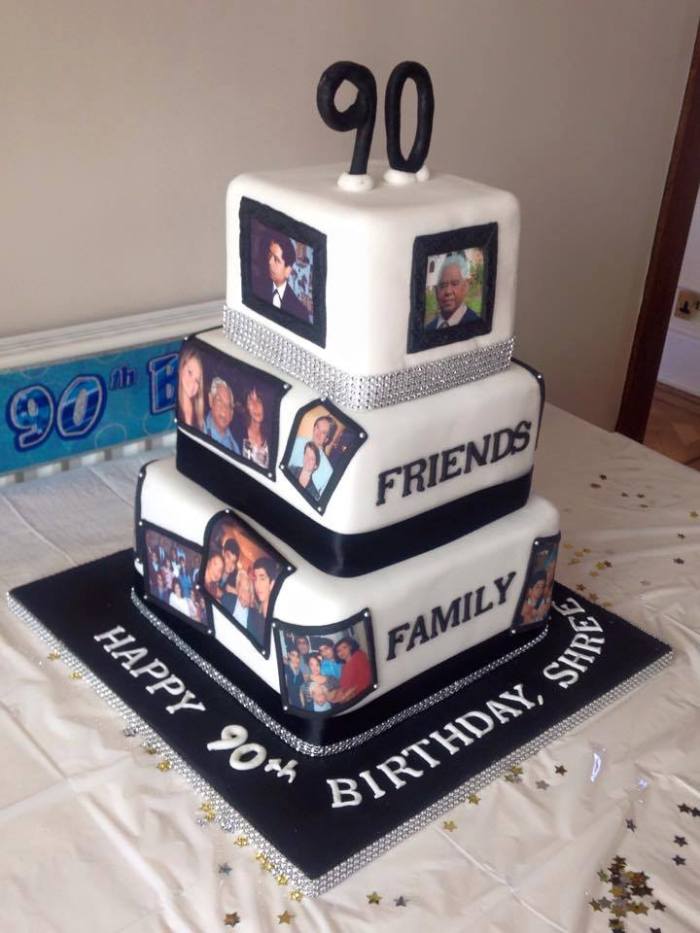
She also made my Daddy’s 90th birthday cake which was incredible.

11053322_10202661310894539_4806396953621413521_n

We added photos of the many friends and family whose company Daddy enjoyed on smaller cupcakes. Everyone enjoyed finding their own ones!

11140766_10202682379061230_4775380217974826707_o.jpg

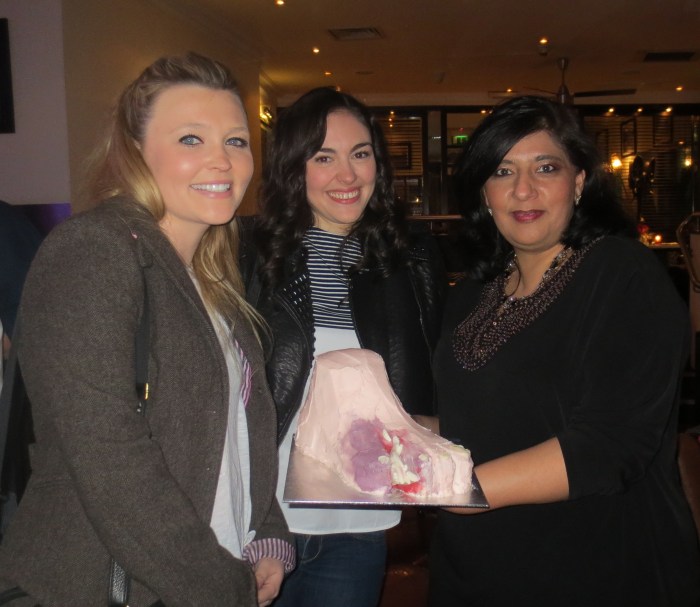
We often celebrate with my NHS family in a central London venue as this is convenient to all. One has become a firm favourite and we get very special treatment. Yet again a few years ago, we all had a very enjoyable evening and then I was surprised with my birthday cake.

IMG_2135

I can only try to describe the horror on the faces of the other guests at the venue. We all work in a clinical setting and there are many situations which would make people turn away but it is the bread and butter of our workload and we get on with it. I think we forget how alien these situations can be to other people not in our profession. There are so many sad times, when as Daddy used to say, we cannot halt the natural timeline when people pass away, that we find a way to manage the strong emotions within our groups of friends.

The cake was amazing and the trainees had clearly thought about the things I really care about. I am passionate about ensuring that patients with diabetes do not develop foot problems and if they do that they get rapid access to care. Sometimes patients need minor or major amputations, which causes great mental and physical anguish to these patients and their families. We use maggots alongside surgical treatments for these patients. We call the maggots, minute surgical operatives, as they eat any dead tissue and clean a wound beautifully without destroying the healthy tissue around the damaged site. In the early days we would use free ranging maggots that would sometimes escape the bandaging containing them. Nowadays we use maggots encased in very fine netting which allows them to work but keeps them in one place!

This cake was a replica of a diabetic patient’s foot complete with an amputated toe and maggots which had escaped the netting! We were enthralled but my apologies to any non NHS staff who were put off their food that night!

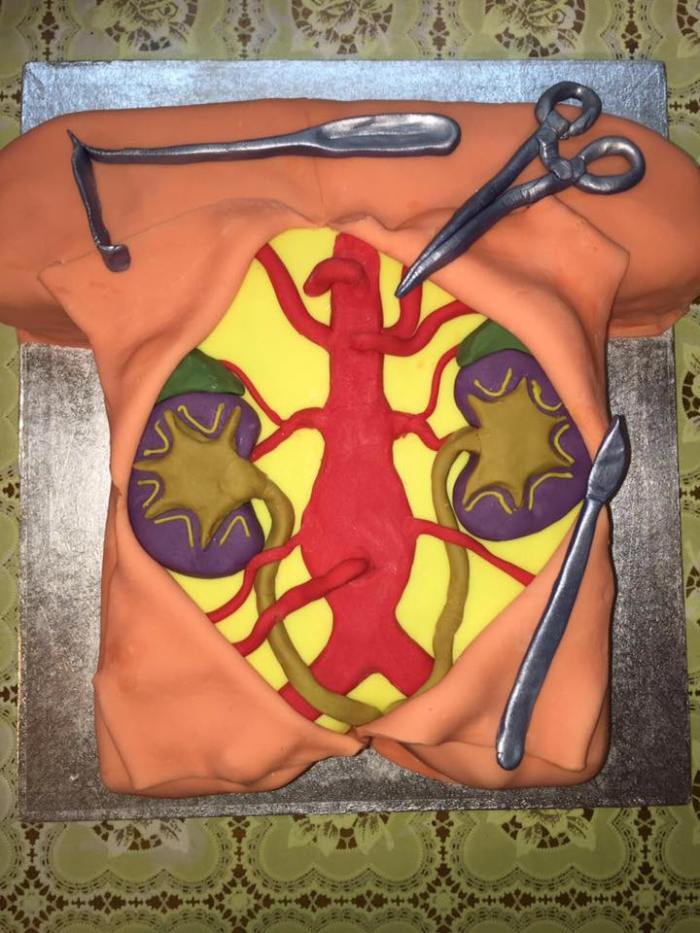
Last year, I had another wonderful cake and really did not want to cut into it! I remember feeling exhausted during the evening and it is only in retrospect that one can explain why.

12821595_10100545684797314_4563791702099733992_n

This cake was decorated to resemble a open human abdomen and came complete with surgical instruments with blood still dripping off them! It took me all evening to agree to cut and share it as it was absolutely beautiful.

This year feels very special. Yes of course a 50th birthday is special but this year feels as if I have been given a second lease of life.

I have spent each day post surgery in pyjamas as it takes too much energy to get into clothes but I have had to make the effort today. I seem to have spent the whole day having a shower and getting into trousers and a top. I cannot summon the energy to put on make up and as I am not allowed to dry my hair yet, I come downstairs looking like a bedraggled rat!

I must have my stitches out today and rather than wasting the time of the district nurses, I have asked my husband to take them out (with full permission from my Surgeon). There are millions of stitches and he takes them out for me very carefully and slowly. What a great birthday present!!! It is really odd how each of these very small steps feel like a gigantic leap towards being normal again.

I am spoilt by neighbours and family and I have a gorgeous cake bought by my husband (and a second one bought by my sister) but I am so tired. I cut the cakes and open my presents and cards but I just want to go back to sleep.

We make a decision that I will have a 50th birthday again next year and make sure I invite all my friends. It is saddening to think of my close friends from my early years, who I am in touch with via Facebook and LinkedIn but have not actually met or talked to for many years. I make a promise to myself to get in touch with all and try to meet up at least once in the next year. And I know that as soon as we start chatting it will be like we only talked yesterday. Children and work seem to take up all available time but I need to find time to catch up with things that really matter.

I go to bed as I have a headache developing. Thoughts start to wander into the future. My children are 18 and 20. I start to think about their 50th birthdays. What will life be like 30 years from now? 30 years ago we developed the mobile phone, disposable contact lenses and CDs effectively wiping out my beloved cassettes. The Mackintosh computer was the in thing! How we have changed. The current mobile phones have as much computing power as a roomful of computers and music is downloaded and played so CDs are going out of fashion. In contrast vinyls are making a comeback. What will be in vogue in 2047? Driverless cars, flying cars, communication by telepathy, travel by thought? Who knows?

Will global warming have caused shifts in water levels with London being flooded? Will the Great Barrier Reef still be colourful? Will we have inhabited Space? What kind of world will we live in? I say we but I will be 80. A macabre thought fills my head. Will I still be here by then? My Mummy suddenly passed away 63 of a heart attack and everyone tells me that I look like her.

Will the world have found peace or will it become more divided than now? Will it still be here? Too many questions and no answers. Now my head has started to hurt. More thoughts wander in and out. I have so many flowers. Perhaps I can dry them and turn my 50th birthday flowers into a present for the kids for their 50th. I start to consider all possibilities and fall asleep.


The Great Escape & Cost of Care (Thank God for the NHS) Day 6 post op

The Great Escape & Cost of Care                           (Thank God for the NHS) Day 6 post op

Friday morning. Another restless night. It was difficult to find a position to sleep in and the wards were noisy. I made a decision last night that I would go home on Sunday as I had planned preoperatively. I now needed to persuade everyone else.

Yesterday going home over the weekend seemed an impossibility but I calculated what I would need to do to manage this. The critical task would be to do the stairs under the watchful gaze of the physiotherapist to ensure that I was safe to go home. Without this tick box, there was no way anyone would let me escape! The journey home would also be an hour and a half and I would need to ensure that I could sit in a car without motion sickness. Game on!

I managed to have breakfast and have a shower before lunch and then fell asleep. I was woken by the physiotherapist who suggested that as I was so tired that I should leave the stairs until Monday. I think I must have got myself out of bed and into the wheelchair in the quickest time possible. I managed to get myself up the stairs and down again and then back to bed. Mission accomplished! Not sure where the energy came from and my brother and sister were shocked that I had done this so quickly. 

My Consultant and the team visited and said they would review me over the weekend and if I was well, would agree to my discharge. Interestingly, throughout my stay, I saw more senior than junior doctors. This is worrying, as it is sharing the experience of senior decision-making that allows trainees to develop.  Trainees find that they are forced to work odd shifts that prevent them from learning from the continuity of experience that we enjoyed in the 90s. On two occasions, the most senior registrar had no team accompanying him, as there was no-one, and he was doing all the work that two or three people do by himself!

I did little on Friday and Saturday apart from eat, sleep and contemplate. Privacy on the wards is difficult and the staff were excellent in ensuring that dignity is preserved at all costs. Patients around me were travelling on their own difficult journeys but even when ill, it was noticeable that there is a recurrent strong human desire to connect with each other. Whether that is just a smile, a greeting or alerting staff when a fellow patient needs help. I had moved within the ward and therefore had to walk further to the bathroom. This was a challenge of course as Miss Independent was desperate to ensure she could do this and have the confidence of the nursing staff, so she could go home. The husband of the patient next door  was very sweet and although he did not say anything, he kept a careful eye on me walking whenever he was there. 

You cannot but overhear conversations on the ward and patients were concerned with paying £12 for the bedside television. Many years ago, each ward used to have a patient area with a  free television that encouraged patients to leave their beds and spend time and conversation with family and other patients.  Many tv lounges have been replaced as there is a greater need for bed space in our hospitals. Now we charge for the bedside tvs. I do often wonder if these tv companies reduced the price for each bedside session by half, whether more people would actually use them and they would increase their profits.

Overnight many patients were admitted and discharged. The turnover through the beds was immense as well as those needing longer term neurosurgical care. One young patient had been in or several days and was desperate to go home. The patient was keen to take their own discharge against medical advice and the staff worked hard to understand the concerns of patient and family to ensure a safe, timely discharge.

Another patient was very keen to go home. They had an accident whilst they had been away from home and their family had travelled to stay near them during their acute admission. Finance was obviously being stretched as the area around the John Radcliffe is not cheap to rent. They and their family were keen to get an early discharge as otherwise they would have to pay for another night in a hotel for three of them. 

This made me start thinking again about the NHS. We are privileged to live in a Nation where we do not have to think about the cost of care as we make decisions about interventions for out health.

Daddy was 90 when he died. The last few years required repeated hospital visits and care as his medical health changed and dementia set in. We were able to access this without a concern that we would not be able to afford it nor whether we should take him to hospital. 

I thought about my own care and listed all my treatment so far:

Medical outpatient x 2

Diabetologist x 3

Cardiologist x 2

Neurologist x 2

ENT Surgeon x2

Neurosurgeon x 5

Audiologist x 1

Nurse preassessment x1

Inpatient stay of 6 days

ITU stay 1 day

Procedures:

Craniotomy for an acoustic neuroma 10 hours

CT scan x 5

ECG x 2

Echo x 1

Dobutamine stress Echo x 1

CXR x 1

Bloods Full blood count, Urea and Electrolytes, Glucose x 4 Cross Match x 1

Medication: 7 days

Estimated Costs 

Private Costs in the UK: £20, 000

Private Costs in the USA: $50, 000 (I have been advised by many readers that this is a gross underestimate and that $500, 000 is  a more realistic figure)

Cost in NHS: 0

There must be many who feel very strongly with regard to the NHS and surely it is time to ask the public what they want and how to fund it. I am eternally grateful for my care as it will get me back to active life doing what I love and enjoying time with my family, colleagues and trainees.  

I was in awe of the night staff in my bay, who had a very difficult job managing a patient who had a bleed within their brain. This caused nausea, vomiting, confusion and a need for expert nursing and medical care. The dedication of the nursing staff was exemplary in the way they were able to manage the patients concerns and fears. Despite the nursing staff being so busy with this patient, I still felt I had the attention I needed to ensure that I had pain relief and all my observations were done. Despite the fact it was only day 7, I was already fed up of the needle prick to ensure my sugars were fine and developed real empathy for my patients with diabetes.  I needed to get out of hospital!

I knew that I would have a long journey on Sunday and was really worried about feeling sick whilst travelling. So we decided that I would visit the coffee shop in the wheelchair. I soon discovered that this was going to be an uncomfortable journey but my brother was a great driver! It was great to get out of the ward, even if just down to the main foyer. I was beginning to feel quite depressed and wondered how my patients managed being in for many weeks. When staffing levels on wards seemed better  many years ago, I remember Ward Sister (with whom you did not argue) asking junior nurses to take patients into the sunshine in wheelchairs, when they had no family or friends of their own to do so. Not sure we do this now at all?

The next day, my husband arrived bright and early. I was given my medications and take home letter. My dressing was changed and I managed to escape on Sunday morning. I had planned to change into outdoor clothes and flat shoes but did not have the energy to do so and left in my pyjamas, dressing gown and slippers. 

The journey back was long. Every bump in the road made my head hurt. I had taken painkillers before I left but these did not seem to make a difference. My body ached but it was such a relief to sit in the car knowing I would be home soon. I am not sure why but I started crying as soon as I sat in the car in the car park of John Radcliffe much to my family’s dismay. I discovered that travelling with my eyes shut seemed to be the best and my husband had to drive reasonably slowly otherwise I felt quite queasy.

Home was strange. Suddenly you feel very vulnerable. I was worried as to whether I would manage the pain but I had several strong painkillers sent home with me. My sister posted on Facebook for me and I felt that I started to reconnect with the real world. When she left later on, I opened up the computer and started to see what had been going on. I began to feel quite tired and made the difficult trek upstairs and tried to sleep having taken the strongest painkillers. 

My brain was obviously not used to thinking and concentrating and it rebelled. I had the most awful headache and just could not sleep. I spent a very restless night and was unable to get out of bed in the morning. I did not touch the computer for several days!

The next few days were spent in bed, in pyjamas doing nothing. I was so exhausted and just could not get myself going. I ate, drank and slept. It is interesting how we all return to our basic needs. My family was wonderful and made sure I had my pain killers on time. We rediscovered my father’s neck warmer which was a godsend. 

Then the flowers, cards and best wishes started pouring in. 

I was surrounded by the scent of flowers and humbled by the good wishes and prayers to help me get better. This is my kitchen table by the end of the first week! Thank you to all of you. When there are so many evil occurrences in the world, gestures like this make you realise how wonderful human kindness and caring can be.

17379766_869471496542797_120361788_o

Waiting for an ITU bed

Waiting for an ITU bed

The national headlines recently have been alarming.

Hundreds of patients have had operations cancelled, many more than previous years as the NHS Crisis continues.

The John Radcliffe Hospital cancelled all non-urgent operations in Jan 2017 and is quoted as one of highest pressured Trusts.

These are just statistics and each data point represents a patient and their personal circumstances. As a NHS, we cancel patients every day and just shift them along a few days or weeks. These are difficult management and clinical decisions but must be taken as the NHS juggles elective and emergency care in the under resourced and under bedded NHS. However these patients are people and the NHS should not be in this position.

We try and ensure that patients with a cancer diagnosis are not cancelled nor patients with special circumstances or who have been cancelled before but the NHS cannot guarantee that this has been 100% delivered this or last year.

I do not have a Cancer, I am not an urgent or an emergency so I could wait if necessary. And I will if needed and I will understand. And the anxiety will increase just like any other patient. At best I will be cancelled one week, at worst…

And there is a huge personal cost to this wait, that is hidden from the NHS deficit. Each patient carries a personal cost, which is relatively small, but added up across the nation, must be huge.

Personally, I have suspended my work and have only just managed to finalise the business cases, delegated tasks and ensured I have handed over both clinical and managerial duties. I have planned a return to work date and the Trust are paying for a locum to cover me. Any delay with the date of surgery pushes that return date back as well as increasing the cost.

My husband has booked a week off work and has planned operations and appointments on his return. If my surgery is delayed, then these patients will either need to be delayed or a plan made for others to cover if possible, often on goodwill but potentially at a cost. He has booked somewhere to stay for a week and has paid up front. This is not available the week after and he will need to rebook and pay a further cost and will lose the money for the first week.

My sons have given notice at University for one week and have booked tickets and accommodation.

My sister has delayed a business trip and has planned to be around me initially and has arranged accommodation with my brother. She has arranged flexible leave with her company and will travel as necessary. My brother is flying in from abroad and is here for two weeks. He cannot rearrange his flight without a cost to him. He has also had to plan his work around his absence for a few weeks. All are using their precious annual leave. They don’t need to come but we lost our father last year and mother many years before that. As orphans, siblings bond even closer together and we have always been a great family unit.

I can be delayed safely and will not publish this until after my surgery as I do not want any special treatment.

I was supposed to phone at midday today but got a phone call at 11am telling me there will be a hospital bed. I am overjoyed as this is the first step. I can be admitted at 4pm and need a further CT scan to ensure that there is no change since my last scan.

I have naseptin, a nasal antiseptic containing chlorhexidine which causes an acute sniffly nose and I am sneezing everywhere! I am worried I might get cancelled by the anaesthetist but she sees me that night and tells me not to worry.

I am seen by the on-call registrar who informs me that there are 6 ITU beds for the morning and although he cannot guarantee a bed, things are looking good.

Lying in bed on the eve of surgery is scary. There is no going back once the operation is done. I will need to work hard to rehabilitate and get my balance and appetite back. I have read all the literature and have kept myself as busy as I can so I don’t think about it. I have washed in the special soap and will stop eating at midnight as well as stop drinking at 6am. I am dreading the surgery but know it needs to go ahead, so have signed the consent form.

I will not know whether there is a bed until tomorrow morning. I don’t know if any of you have seen the television true series called ‘the Hospital’. A gentleman was taken to theatre and was prepared for theatre with the access lines, catheter, monitoring etc and was cancelled at the last minute. My heart went out to him and his family as this is just not fair. I know that even if there is a bed that this could be cancelled at last minute and this fills me with fear.

I will wake up early and have a shower. I will follow all the instructions given to me and behave like a good patient. I have plenty of time now as I have nothing else to do. It is an odd time as the family are not here, I am a patient in a bed with nurses and patients around me. I am an ordinary person, stripped of all identification of who I am, waiting patiently for an ITU bed that will allow my surgeon to go ahead with necessary surgery.

I feel sorry for the staff, surgeons and managers who have no real ability to manage this bed resource as it depends on the acuity of admissions overnight. Is the NHS funded correctly, are we using this resource wisely, is there enough social care funding to allow flow through the hospital, should we separate elective and emergency care? I don’t know but there is a NHS Crisis right now and I am now on the other side seeing it for myself.

The Surgeon

The Surgeon

December

I remember my December appointment. I had read all about my diagnosis. Google and medical text books are great but cause many anxieties instead of a sense of relief. My recommendation? Don’t look up your diagnosis! I am worried about all the complications discussed at my first appointment and a facial nerve palsy (loss of function with a facial droop) is definitely my worst fear. I have come to terms with a unilateral deafness but am still worried that if I am operating in a surgical theatre, I may not be able to hear my scrub sister and assistants. Or the medical student on the right of me. I am told that musicians go back to work after this surgery so I need to see how I feel.

My husband and I go to the appointment and instantly feel at ease as we enter into the clinic room. It really does matter how the room is set up. It is light and there is no noise. I sit near my surgeon, close to him without the desk as an artificial barrier between us. He sets the scene and immediately talks about my worst fears. How does he know? He must do this every day but for me the discussion feels personal. He treats me like an individual and addresses each of my questions. He explains the rationale of his approach and tells me how he will try and minimise complications or manage them if they do happen. He has pre-empted many of my concerns and treats me like a patient but with an understanding that I am a colleague. Importantly, he does not assume I know everything and explains the rationale with diagrams. I love explaining diagnoses and treatments to my patients with the aid of diagrams and therefore find this a very comforting gesture. Later I remember the diagrams,  as they stay fresh in my mind, when I am explaining the discussion to my sister.

A nurse walks into the consultation and I feel uncomfortable, as I don’t know who she is. I reflect on how I feel and the fact that nurses walk in and out of my clinic every day. I try and introduce each one but at times this is difficult when you are explaining a difficult diagnosis. Maybe this illness will make me a better doctor as I learn to empathise even more on my patients’ feelings.

We negotiate a plan of action for my operation. I feel confident as I can make my own informed decision but know full well that I have been steered and guided into the right decision by the experience and words of the consultant surgeon.

January

I am still wearing my heels as I go for my final appointment to make the decision for surgery. I am determined to be in them until I stop working (so I feel I am in control!). It seems to have been a long time since the original diagnosis in October.

I go with my sister and close friend to this appointment.

My husband cannot attend as he is working hard to manage his patients within the NHS. Clinic cannot be cancelled as he has the pressures of the 2-week rule for breast cancers. To explain, this means that patients must see a breast surgeon (as to whether they have a breast cancer or not) within two weeks. I cannot imagine how these patients must feel, finding a lump and not knowing what it is and fearing the worst.  I am so lucky that my mass is benign and not malignant. This additional diagnosis would have brought a huge additional burden and conversation and I can only imagine the professionalism of the entire multidisciplinary team at this difficult time.

My surgeon is obviously running a busy clinic but this all becomes irrelevant once we walk through the clinic door. He concentrates on my case. We are introduced to the specialist nurse. I introduce my sister and my concerned friend. The surgeon explains my diagnosis and goes through the scan. He is just as comforting but his words are the terms that my companions can understand. And they are really helped by hearing the information from him and afterwards tell me that I am in safe hands. What do we say that develops those feelings in our patients? I am still thinking and that will be a future blog!

I agree I need surgery and have a pre-assessment that day. How efficient. It is 10.30am and I have my ECG straight away. We are asked to go for coffee until my designated time with the specialist nurse who will see me and explain what I can expect. She is on time and she is so patient. She goes through my history and tells me about the pre and post operative course. I need blood tests and a nasal aseptic. I will be admitted the day before surgery and will need to shower with a special shampoo and body wash. I should not wear deodorant on the day. Really?? I will not be able to wash my hair for several days and certainly will not be able to dye my hair. I will be in ITU initially and will be in for around 10 days. (Immediately I set myself a challenge to be out in 5!). I am given patient leaflets and a guide to the hospital. Have I read them yet? No but I will before surgery. I ask about pain and wonder why it seems so natural to ask my nursing colleague and not the surgeon. She gives me her number and tells me to phone, anytime. And I believe her.

I am then asked to go for lunch as the senior house officer will see me at 2pm. We find an M & S restaurant and sit down and have a meal. I cannot remember the last time I had an hour for lunch or a sit-down meal in a hospital. Normally  I either eat on the run or forget to eat. This seems normal to me and my colleagues but my companions do not understand my comment on this and state that this must be so unhealthy and that I should know better. The NHS is so pressured and the workload is high. We all strive to get important jobs done in a timely fashion but the list is endless and this is an impossible task. We all give freely but I can feel the goodwill slowly seeping out of the NHS as the NHS staff feel more and more unvalued. We need to consider how we role model to our colleagues. What we did in the old NHS may not be correct now.

We rush back at 2pm and are told that the SHO is covering for a rota gap and has had to cover the ward as well as the preoperative clinic so will be back as soon as he can. I understand completely as this is happening across the NHS. We sit down and wait patiently. Time passes and it is now after 3pm and I enquire whether he is still busy. And yes, he is as there are sick patients on the ward. Of course I could clerk myself but this would not acceptable but I am tempted. Should patients be allowed to clerk themselves if we gave them a proforma? I wonder….

It is now after 4pm and he is still busy.  Now I am getting frustrated despite the fact I work in the NHS. I can imagine the car parking ticket when we finally get out of here. It will be expensive but it will be cheaper than hospital parking in London. My poor patients who must go through this everyday and are still so understanding and sympathetic.

At 4.30pm he finally gets back to clinic. He looks exhausted and is apologetic. He doesn’t need to be. I know he has been busy. Lucky for him, I give a concise history. He professionally clerks me in 20 minutes. I cannot resist asking him about his training and career plans. He is dedicated to neurosurgery but wants to take an extra year to make sure that when he enters a training programme to be a Consultant Neurosurgeon, that he has made the right choice. His passion shines through in that short period of contact. And I know he will be a great asset and future consultant in the NHS.

Finally, I can now go home. I buy the pre-assessment team some chocolates. Everyone loves chocolates. And they deserve a big thank you.

Me and My Acoustic Neuroma

Me and My Acoustic Neuroma

I have been a consultant vascular and general surgeon for ten years and am always busy. I have been tired but I have never been so exhausted as now, finishing a long theatre list on a dark October night.

I walk back to the car and feel unbalanced, especially in my trade mark high heels. Maybe I have just got to the age when I need to wear flats. My trainee comments that I am walking like I am drunk. Alarm bells start to ring.

I pop into the neurology clinic the next morning and explain my worst fears: ‘I think I have a brain tumour’. It is probably just vestibulitis after an awful cold, but it is not getting better. Instead, my symptoms are worse. I have headaches and I report that my right eye feels dry.

The neurologist reassures me but arranges a scan. She phones MRI and they can fit me in straight away. I have my scan and realise, because they need a second scan with contrast, that they have found something in my head. I am a professional but in those few minutes become a worried patient. I think the worst: what type of brain tumour, how large and where is it?

I find the neurologist waiting for me to explain the scan findings. They have found something. I have a 3cm mass in my cerebellum which is compressing my brain, causing the dizziness. It is not malignant but couldn’t have been sited in a worse place. I cry. The neurologist explains that I will need to see a neurosurgeon and their team. I have an acoustic neuroma.

Within two days, I am referred locally and told I need surgery; there is no other choice. I will need three months away from work. Then it gets worse. I will lose my hearing, there is a 20% risk of damage to the nerve supplying the movement of my face, a risk of damage to the sensation of my face, and to my ability to balance. I will feel sick after the surgery and, of course, there is the pain.

I listen and make my decision: I am not having surgery, there must be other ways.  Perhaps radiotherapy or just wait for it to settle. I become an expert on acoustic neuromas overnight. I read all the literature. The patient leaflet explains that if I do have surgery ‘it will attempt to preserve my quality of life’. Great.

I seek a second opinion and am reassured by the surgeon. I finally understand what I teach. To have compassion and to gain your patient’s absolute trust. In his explanations of the surgery, his words are comforting as he has pre-planned management of any complications that might be expected. I explain my own fears; I would struggle with a facial nerve palsy. He listens patiently and discusses all options with me. I take all the advice and it slowly dawns on me, I really do have no choice but surgery.

I start thinking about the cost of care and how fortunate I am in the NHS. I start calculating the cost in America and it mounts up to hundreds of thousands of pounds. I cannot imagine having to make sure that I can pay before taking advice, or letting the cost of care drive my decision making. I have my efficient and thorough pre-assessment and get a date for surgery in February.

In my rapid journey from being a professional to a patient, I have had so many worries. I have however been lucky about one thing. I am in the NHS